Triggers That Feel
Better
Smoother
Faster
Precision Triggers Built Right Here in the USA

If you’ve spent any time shopping for an aftermarket Glock trigger, you’ve probably seen the words “drop-in” more times than you can count.
But what does that actually mean?
Because if I have to install a trigger, take everything back apart, make an adjustment, put it together again, test it, and repeat that process until I finally get what I was expecting, I think we need to have a conversation about what “drop-in” is supposed to mean.
To me, a drop-in trigger should be pretty straightforward. Install the correct trigger in the firearm it was designed for, perform the required safety and function checks, and the trigger should provide the characteristics it was designed to provide without becoming a tuning project.
When I call a trigger drop-in, I’m talking about a system designed to fit the firearm it was made for without requiring repeated fitting or tuning just to get the intended result. That doesn’t mean you can ignore proper installation or safety checks. It means the trigger itself shouldn’t become a trial-and-error project. If you bought the correct trigger for your Glock model and generation, you should know what you’re getting before you start taking things apart.

Every aftermarket trigger still has to be installed correctly. That’s different from repeatedly installing and removing components because you’re trying to dial in travel, reset, or some other characteristic. I don’t think most shooters buy a “drop-in” trigger because they’re looking for a new weekend tuning project. They want an upgrade that was designed around the firearm from the beginning and provides the intended characteristics once it has been properly installed.
Drop-in definitely doesn’t mean universal. Glock has different models, generations, and configurations, and you need to know exactly what you have before ordering parts. Something being designed for one Glock doesn’t automatically mean it belongs in another one because the pistols look similar. Always check the compatibility information for the exact trigger you’re considering. Getting that right before ordering saves a lot of frustration once you get to the installation.
I don’t think a trigger upgrade should be about changing something just for the sake of saying it’s aftermarket. There should be a reason you’re doing it. Maybe you want less overall travel, a different reset, reduced post-travel, a different trigger shoe, or a better overall feel. Whatever the goal is, those characteristics should come from the design of the trigger system. You shouldn’t have to keep experimenting with the trigger just to figure out what you bought.
Pull weight gets plenty of attention, but travel and reset are two things you’re going to feel every time you use the trigger. Excessive movement can make a trigger feel sloppy or longer than it needs to be. Reset gives you feedback as the trigger moves forward and becomes ready again. Those characteristics are part of the trigger design, not little details I want to leave until after installation and hope we can somehow tune our way into getting them right.
Here’s something that gets lost when people hear the words “drop-in.” It doesn’t mean drop it in and forget about it. You’re still changing components in a firearm. Proper installation matters, and the appropriate safety and function checks still need to be completed afterward. The firearm also needs to be properly tested before you depend on it. “Drop-in” should describe how the trigger was designed to fit and function, not give anybody permission to skip the important stuff.
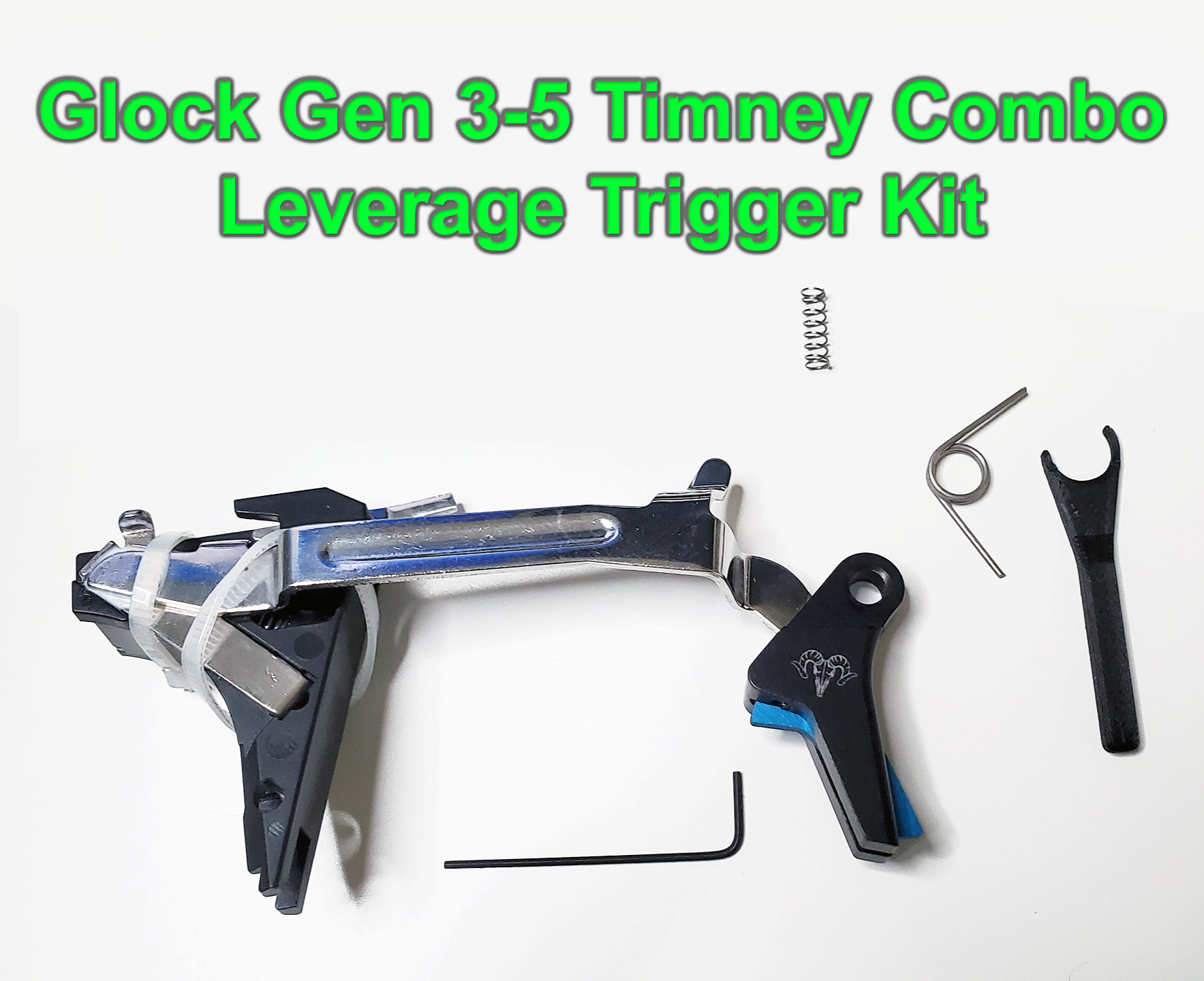
When I developed the RAMM Tactical Glock replacement triggers, I wanted the trigger to provide the characteristics I was after without making the customer repeatedly assemble, disassemble, and tune everything. The design is intended to reduce overall trigger travel, reset, and post-travel while retaining factory-strength springs. For me, that’s a much better approach than handing somebody a pile of parts and expecting them to figure out the final trigger through trial and error.
I’ve talked about this before, but it’s worth mentioning here because it ties directly into the design. I retain factory-strength springs in our Glock trigger systems rather than depending on spring changes simply to chase a lighter pull. Those springs were designed to work together as part of the Glock system. My approach is to use trigger design, geometry, and leverage to achieve the characteristics I want while keeping that factory spring strength in the equation.
Some shooters are completely comfortable working on their own Glock. Others aren’t, and there’s nothing wrong with knowing where your comfort level ends. A trigger may be designed as a drop-in system, but you still need the tools, knowledge, and confidence to install it correctly and perform the proper checks afterward. If you’re not comfortable doing that, have somebody qualified handle the installation. RAMM Tactical also offers professional trigger installation for shooters who would rather have it done.
Don’t stop at the words “drop-in” on the product page. Make sure the trigger fits your exact Glock model and generation. Look at what the complete system is designed to change, including travel, reset, post-travel, trigger feel, spring configuration, and installation requirements. I’d also want to know whether additional fitting or tuning is expected. The more you understand before buying the trigger, the less likely you are to end up with something that doesn’t match what you wanted.
At the end of the day, that’s really how I look at it.
If I’m calling something a drop-in trigger, I think it should make the upgrade process more straightforward, not turn it into a science experiment.
That doesn’t eliminate the responsibility of proper installation, function checks, or testing. Those things always matter.
But once you’ve selected the correct trigger and installed it properly, you shouldn’t have to wonder how many more times you’re going to take the gun apart before the trigger finally does what it was designed to do.