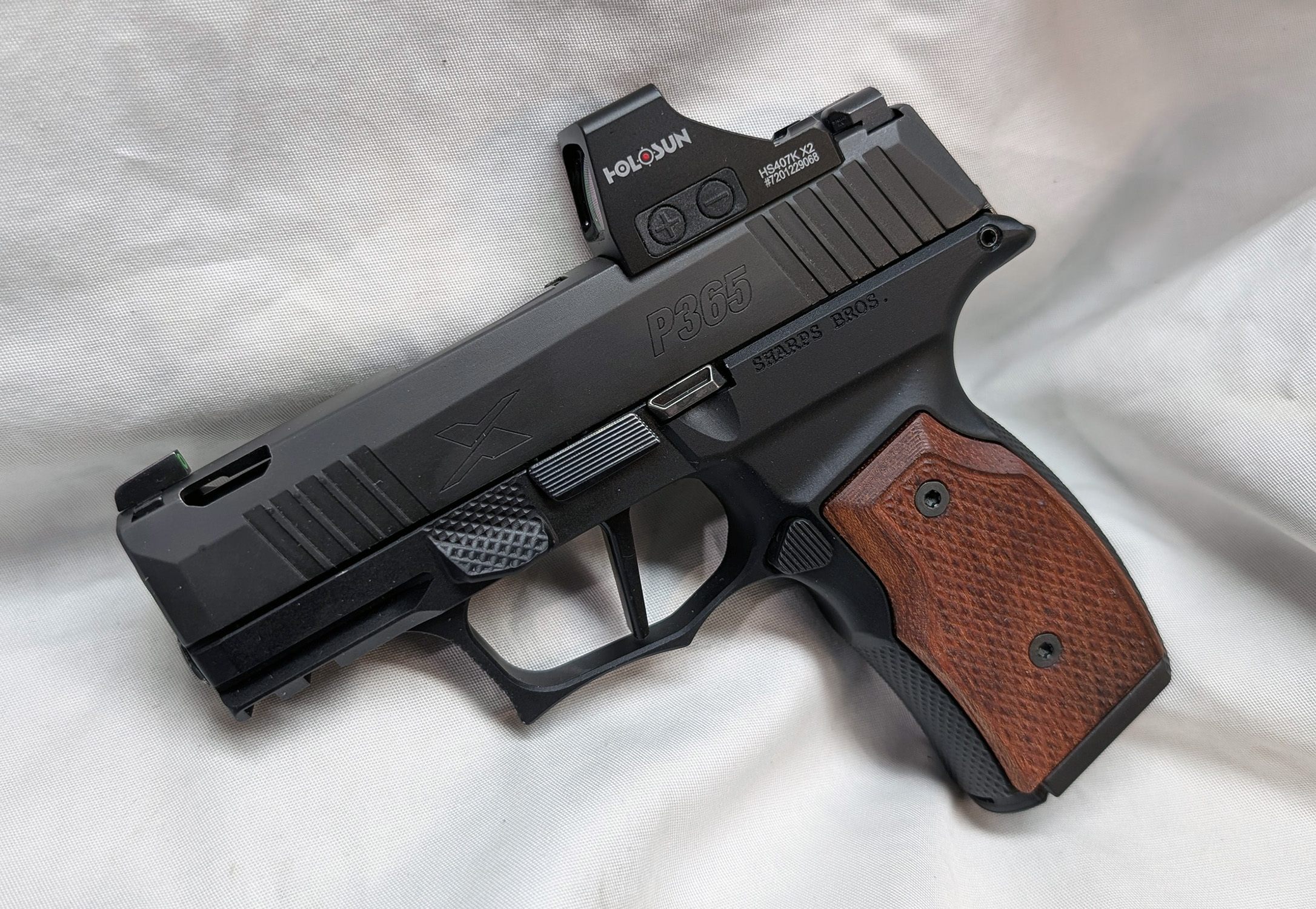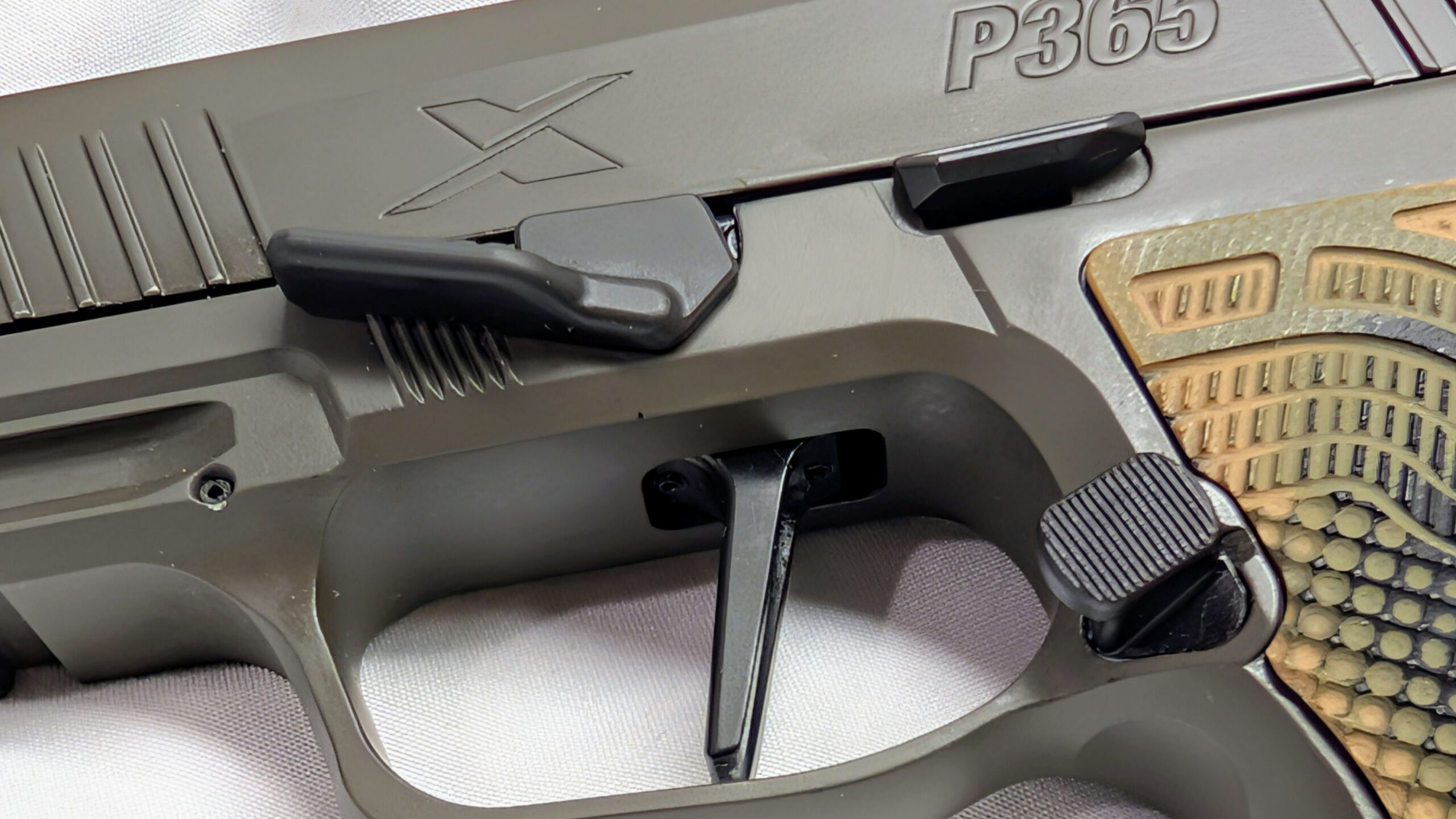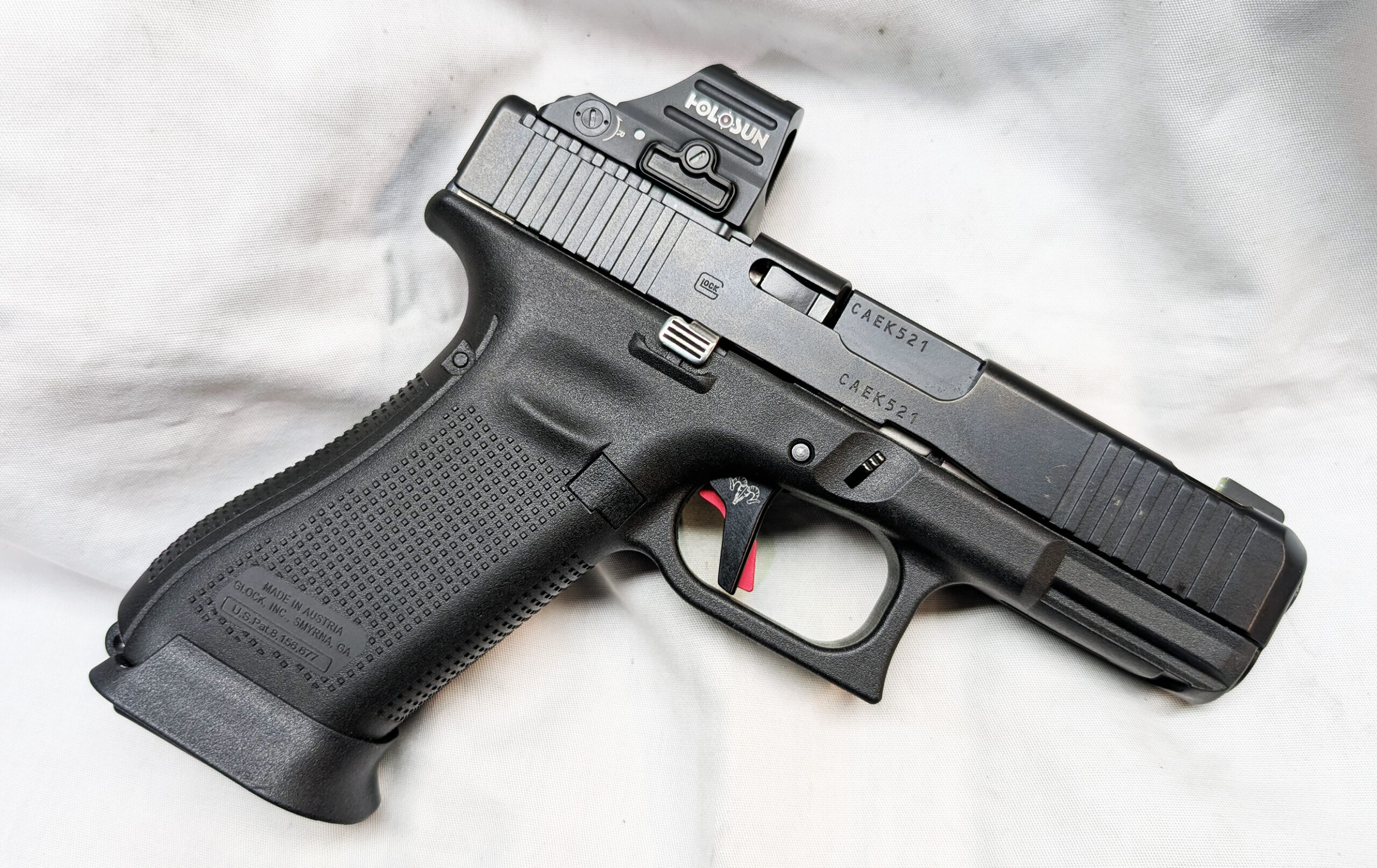
Triggers That Feel
Better
Smoother
Faster
Precision Triggers Built Right Here in the USA

When shooters start comparing triggers, pull weight usually gets most of the attention. I get it. It’s an easy number to understand. One trigger says 5 pounds, another says 4 pounds, and naturally the lighter one sounds like it should feel better.
But your finger doesn’t read a spec sheet.
What you actually feel when you press a trigger is the result of several things working together. Trigger shape, finger placement, travel, resistance, reset, and especially geometry all play a part.
That’s why two triggers with similar pull weights can feel completely different.
And it’s one of the reasons I pay so much attention to leverage when I look at trigger design.
When I talk about trigger geometry, I’m talking about the physical relationships that determine how your finger interacts with the trigger and how that movement works through the trigger system.
Where does your finger naturally land? How far is that contact point from the trigger’s pivot? What direction are you applying pressure? How does the trigger move as you press it?
Those things may not look exciting on a product page, but your finger notices them every time you press the trigger.
Geometry is one of those things you can overlook until you put two different triggers side by side. Then the difference can become pretty obvious.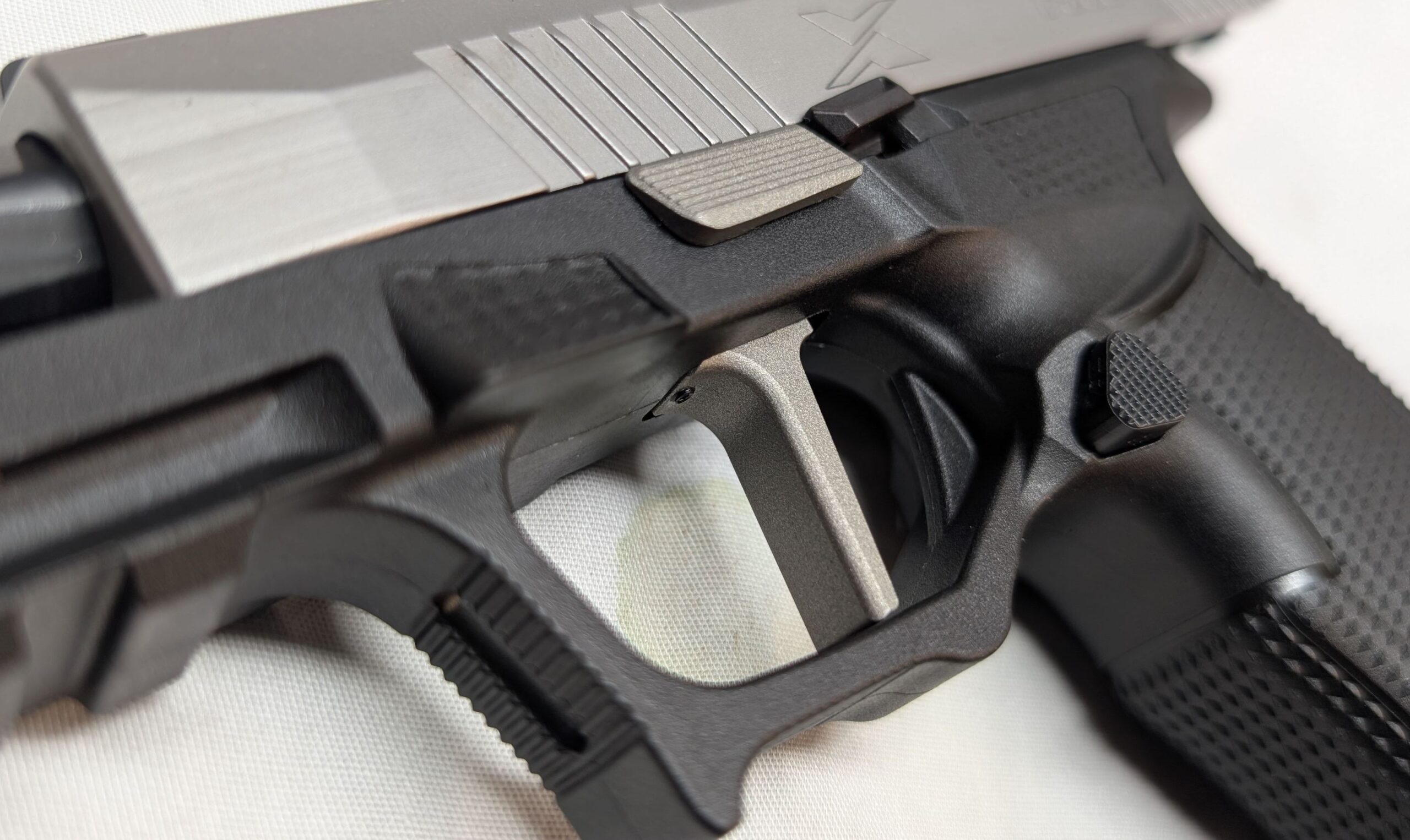
Here’s the easiest way I can explain leverage: where you apply force matters.
If you’ve ever used a long wrench instead of a short one, you already understand the basic idea. Changing the distance between where force is applied and the pivot changes the mechanical advantage.
A trigger has its own geometry, and your finger becomes part of that equation when it contacts the trigger.
Change that contact point and you can change the leverage you experience during the press.
That doesn’t magically eliminate the mechanical resistance inside the firearm. It changes how you interact with that resistance.
That distinction matters.
Two shooters can press the same trigger and describe it a little differently simply because their hands and finger placement aren’t identical.
Even the same shooter can change the feel by moving the finger higher or lower on the trigger face.
That’s one reason I don’t like reducing trigger comparisons to pull weight alone.
The trigger gauge gives you a measurement. Your finger experiences the trigger through a contact point, and that contact point affects leverage, movement, and the way the press feels from beginning to end.
That’s the stuff you actually notice when you’re behind the gun.
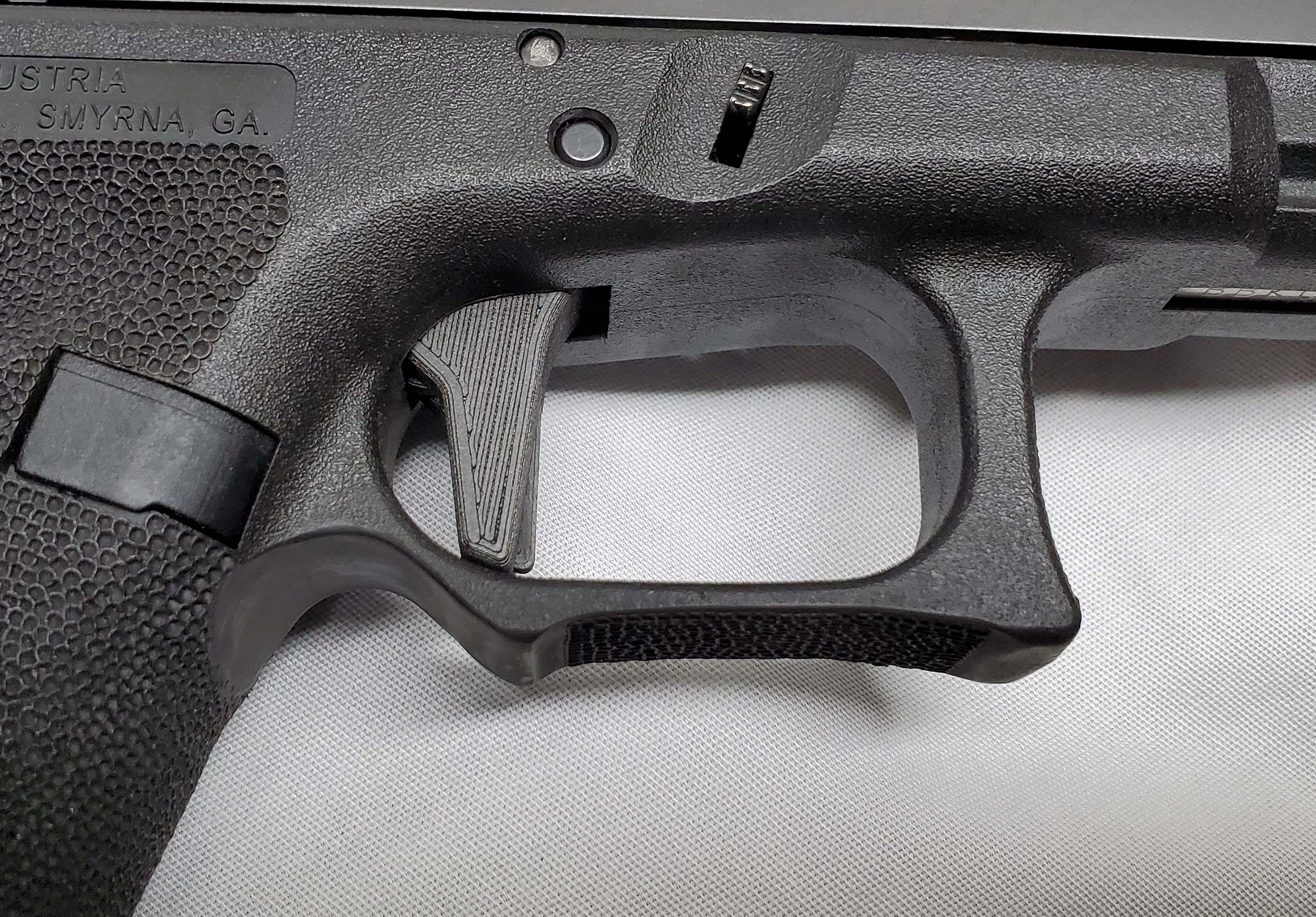
I like a flat trigger design, and obviously that’s part of what we do with RAMM Tactical. But I’m not going to tell you that simply making a trigger flat automatically makes it better.
That would be way too easy.
What I like about a flat trigger is how it can give the shooter a different contact surface and allow more flexibility in where the finger interfaces with the trigger.
But the trigger shoe is still only one piece of the system.
A flat trigger with poor overall geometry doesn’t suddenly become a great trigger because it looks good. Shape and geometry need to work together.
This is where I think shooters can get distracted by numbers.
Say you’re comparing two triggers with similar measured pull weights. One might feel smoother or more manageable because of the shape of the trigger, where your finger contacts it, how the trigger travels, and how the resistance develops through the press.
That doesn’t mean the scale is wrong.
It means the scale is measuring one characteristic.
Pull weight is useful information, but I wouldn’t choose a trigger based on that number alone. I want to know how the entire press feels.
Geometry doesn’t exist by itself. You also have to consider how the trigger moves.
There’s the movement before the break, the break itself, the movement after the break, and then the reset as the trigger comes forward again.
If a trigger has unnecessary movement, simply making the pull lighter doesn’t necessarily address what you dislike about it.
That’s why I look at trigger travel as part of the overall system.
When geometry, leverage, travel, and reset work together, you get a much better picture of what the trigger is actually doing than you’ll ever get from one pull-weight number.
Everybody talks about the break. Reset deserves some attention too.
I want a reset that feels positive and predictable when the trigger comes forward. I’m not interested in chasing the shortest possible reset just so I can put another impressive number on a product page.
Shorter isn’t automatically better.
What matters to me is how the complete movement feels and whether the shooter can clearly recognize what the trigger is doing.
One of the best ways to understand that is to practice shooting from the reset.
When you take a shot, press through the break and keep the trigger held fully to the rear through the shot. Don’t immediately take your finger off the trigger and allow the gun to fully cycle while keeping your finger depressing the trigger. Hold it to the rear while you regain your sight picture for the next shot.
Once you’re back on target, slowly allow the trigger to move forward until you feel it reset. When it resets, stop moving the trigger forward. From there, press through the next shot and repeat the process.
That’s shooting from the reset.
When you’re practicing, focus on doing it deliberately rather than simply trying to pull the trigger faster. Hold the trigger to the rear after the shot, regain your sight picture, feel the reset, and then begin the next press.
With practice, that sequence becomes much more natural.
It also gives you a better understanding of what the trigger is doing throughout the entire cycle. You’re not just feeling the break. You’re paying attention to the press, the break, the movement of the trigger, and the reset.
Again, geometry is part of that experience because it influences how your finger interacts with the trigger throughout its movement.
This is another place where trigger shopping can get confusing.
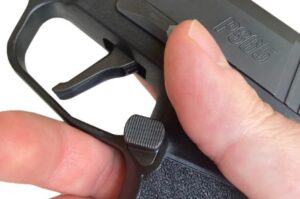
The part your finger touches gets all the attention because that’s the part you can see. A different color, a flat face, a curved face, or some fancy machining can make a trigger look completely different.
But what are you actually upgrading?
If you only change the trigger shoe, you’re changing one part of the interface. A complete trigger system can involve much more than the shape of the piece under your finger.
That’s why I always tell shooters to look past appearance and ask what the product actually changes.
There’s a reason we call ours the Leverage Trigger.
My approach isn’t simply to chase the lightest pull-weight number I can put in a description. I’m interested in how the shooter interacts with the trigger as a complete system.
That means looking at geometry, leverage, finger placement, trigger shape, travel, reset, and the other parts working together.
RAMM Tactical also retains factory-strength springs rather than treating lighter springs as the only route to changing trigger characteristics.
For me, that’s the bigger picture. I want the design of the trigger to do the work it’s supposed to do instead of focusing on one number because that number is easy to market.
Instead of immediately asking:
“How light is it?”
I’d start with:
“What does this trigger actually change?”
Does it change the trigger shape? Geometry? Finger placement? Travel? Reset? Is it only a shoe, or are you looking at a more complete trigger system?
And most importantly, does any of that address what you don’t like about your current trigger?
Those questions will tell you a lot more than simply sorting trigger options from the lowest advertised pull weight to the highest.
There’s no single trigger geometry that’s going to feel perfect to every shooter.
Hand size matters. Finger length matters. The pistol itself matters. Personal preference matters.
What I look for is a trigger that allows a natural, repeatable finger position and gives me a predictable press from beginning to end.
I don’t want to fight the trigger. I want to understand exactly what it’s doing as I move through the press, break, and reset.
That’s a much more useful standard to me than chasing the lowest number on a trigger gauge.
If there’s one thing I want you to take away from this, it’s pretty simple.
Look at the whole damn trigger.
Don’t stop at pull weight. Don’t stop at whether it’s flat or curved. And don’t assume the trigger with the shortest reset or fanciest shoe is automatically the better design.
Look at geometry. Look at leverage. Look at travel. Look at reset. Think about where your finger sits and what you’re actually trying to improve.
A trigger is a system, and your finger is the part of that system that tells you whether all those pieces are working together.